
Side by Side: Guiding in Para-Triathlon
Guiding in triathlon is one of the most powerful examples of teamwork in sport. For vision-impaired (VI) athletes competing in paratriathlon, a guide is not just a training partner or race companion, they are a trusted teammate who helps make participation, performance, and independence possible.
At Momentum Triathlon Academy, we are lucky enough to work with two visually-impaired Para Triathletes, Maggie and Patrick. We also work with their wonderful guides, Lauren and Benson. Much of the focus is on the progress and development of the Para Athlete, however in this series, we will get the perspectives of our two guides, Benson and Lauren, share their stories, their insights into what guiding really involves, why it matters, and how we can help support our guides and visually impaired athletes.
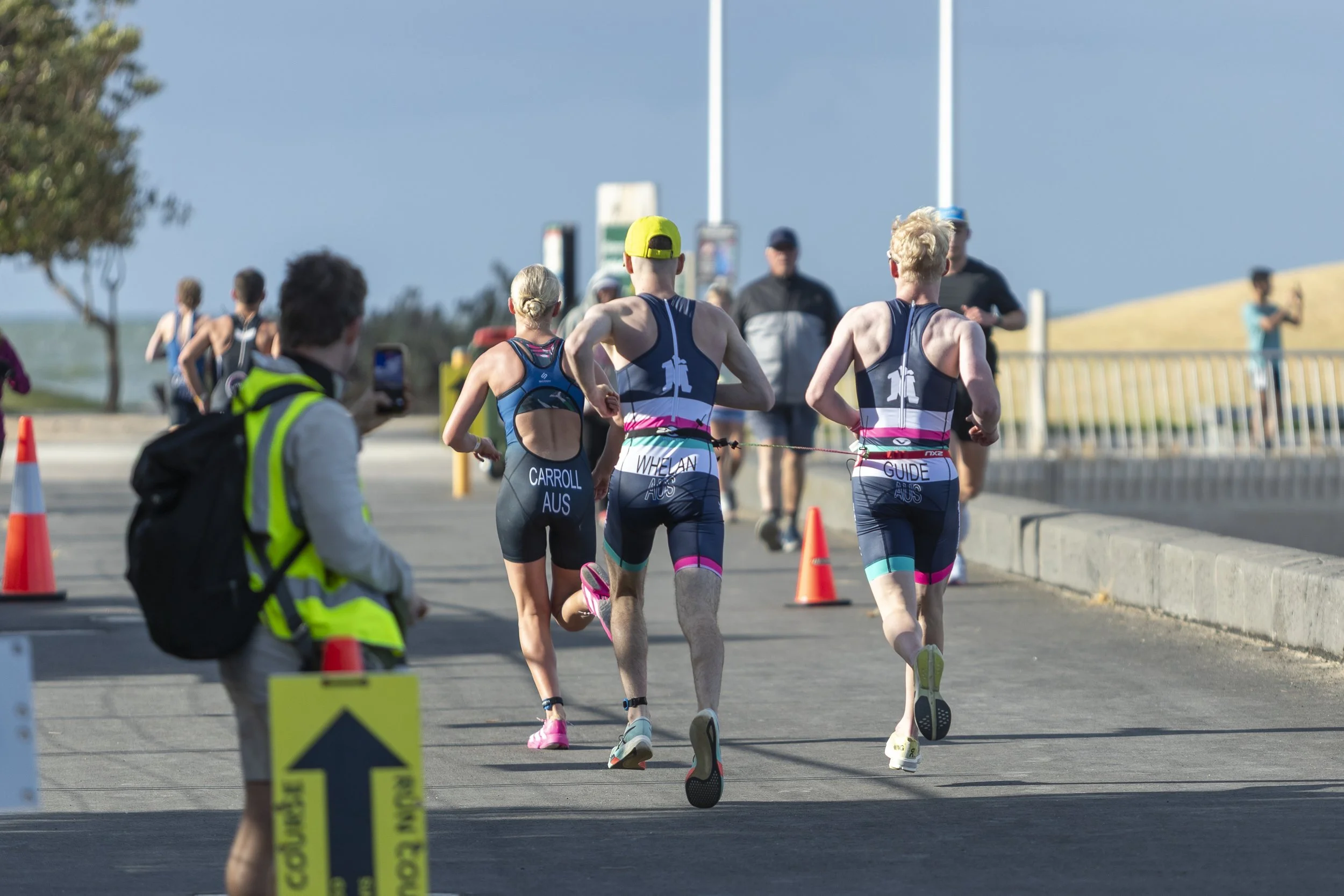
So, what is guiding in triathlon?
Guiding is the role of supporting a vision-impaired athlete to safely and competitively complete a triathlon. It requires clear communication, mutual trust, and strong synergy between athlete and guide.
Depending on the athlete’s level of vision, the amount of verbal guidance required can vary significantly. Some athletes may need constant communication around direction, obstacles, and spacing, while others require more subtle cues. A guide must also have a higher fitness level than the athlete they support, so that they can communicate clearly without compromising the athlete’s pace or performance.
At its core, guiding is about trust, consistency, and putting the vision-impaired athlete’s experience first.
Beyond race day, what else does guiding involve?
Whilst guides and vision impaired athletes may not train together on a daily basis, guiding isn’t just about race day. Much of the work is unseen, behind the scenes. Guides often provide pre-race support, helping with travel logistics, bike assembly, accommodation, and race preparation. They may assist with daily life tasks, such as navigating unfamiliar environments, shopping, or moving safely through busy race venues. Just as importantly, guiding involves emotional support, for example being a calm, steady presence in high-pressure situations.
Ultimately, guiding is about building a trusting partnership that creates confidence and independence for the athlete, both in and out of competition.
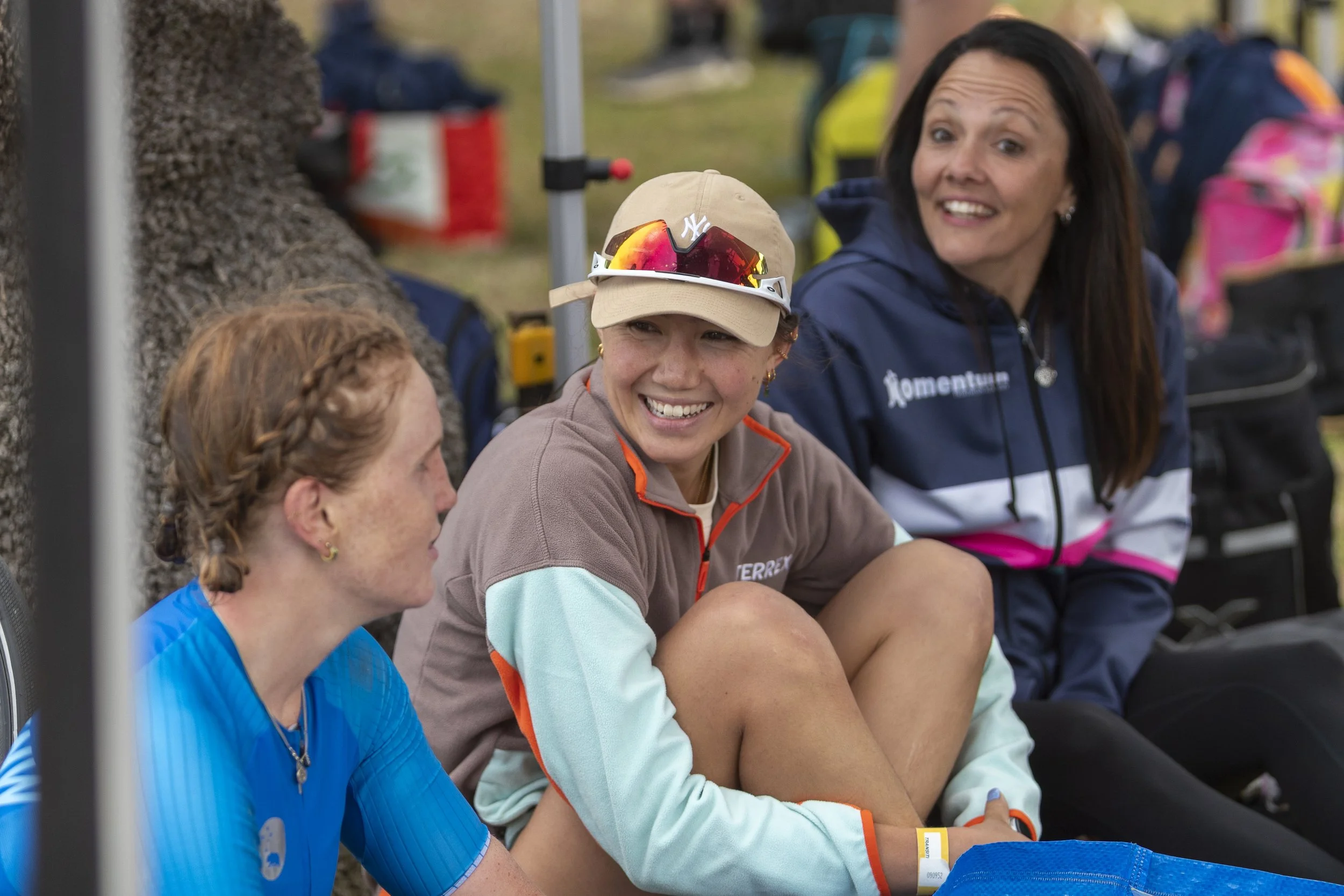
How do people get into guiding?
Like many meaningful roles in sport, guiding often begins with simply saying “yes!” when the opportunity presents itself. Many guiding opportunities arise through word-of-mouth and community connections. In Benson’s case, he said “yes!” to an opportunity to help a para-triathlete seeking a dedicated, full-time guide.
If you are reading this and are interested in guiding, the advice from Benson and Lauren is to: stay open to opportunities within the triathlon community; engage with organisations such as Achilles or local para-sport clubs; volunteer at vision-impaired or para-sport events.
What should new guides know?
First of all, there is no one-size-fits-all approach to guiding. We have however seen that excellent guides display similar values and qualities such as selflessness, adaptability and of course physical capability. Excellent guides build a strong partnership with their athlete, both on and off the course. They also remember that the race belongs to the athlete and that the guide’s role is to enhance the athlete’s experience, not to pursue their own result.
Every vision-impaired athlete has different needs, preferences, and challenges. If we look at the difference between Maggie and Patrick, their needs are different, therefore Lauren and Benson’s roles as guides, are also different. Athletes with partial vision may struggle with depth perception, making turns, cones, crowded areas, and transitions can be particularly challenging. Having clear communication, predictable routines and consistent processes for dealing with these challenges is important in order to reduce confusion and stress. Repeating the same approach to transitions, technical tasks, and race preparation helps everything feel more automatic for both the athlete and the guide when it matters most.
A huge thank you to Benson and Lauren for their thinking and contributions to this article.