
Why We Take Our Junior Triathletes Trail Running Every Winter

There is something about running in nature that heightens all of your senses and engages you, not only in your surroundings, but in your running as well. I just don’t think you can beat it. Yes, I’m biased and yes, that’s a personal preference but we have also seen the benefits in our coaching work with junior athletes at Momentum Triathlon Academy in Melbourne.
What began as an experiment with 17 young athletes in 2024, through two Trail Adventures to Marysville and Lake Mountain, has become one of the most important parts of what we do at Momentum Triathlon Academy. So important that in 2026 we are expanding it. This winter we are kicking off a trail running program in Studley Park in May, followed by taking our athletes to race in the Rapid Ascent Trail Running Series across some of Victoria's most beautiful locations, such as Lerderderg State Park, the Surf Coast, and the Dandenong Ranges. If you're a parent wondering why a triathlon academy spends its winter on muddy bush trails, here is our honest answer:
Trail running can be great for mental health
Mental health matters. A lot.
The research on what time in nature does for mental health is compelling. Even small chunks of time spent walking, running or mountain biking in nature is shown to drop cortisol and stress levels. For teenagers navigating school pressures, social media and the general intensity of adolescence, this matters enormously.
A 2023 joint consensus statement from Sports Medicine Australia and the Australian Psychological Society concluded that natural outdoor environments consistently lead to greater mental health benefits from physical activity than the same exercise done indoors. The statement also highlighted that physical activity in nature produces its largest improvements in mental health when it is also done in a group. We have seen this firsthand. The athletes who come off the trails after our adventures are different to the ones who got on the bus that morning. Excited but tired, engaged with each other and more settled. More themselves.
Trail running demands your attention in a way that road running does not. It’s harder to stress about an exam or a social situation when you are picking your way through tree roots, hiking hills and watching for the next marker on an unfamiliar trail. The natural environment forces you into the present moment, and the rest fades away. Exercise does this, but the trails in nature amplify it.
Trail running builds strength and resilience in young athletes
Most of our young athletes train in or near the city of Melbourne. The terrain is flat, familiar and predictable. That predictability can be great when we want to control the controllables, but without new stimuli every so often, flat urban landscapes can lead to athletes who are less versatile or resilient.
Trails fix this quickly. Uneven ground, steep climbs, descents that demand control, surfaces that shift underfoot… All of these activate muscles and force new movement patterns. In the same way as open water swimming is different to pool swimming, athletes return after a session on the trails with new skills, new awareness of their body and some muscles that have worked in a different way to usual. These are big benefits for young developing athletes who can benefit mentally and physically from trying a range of activities.
Dr Jean Côté, whose research on youth athlete development is widely cited globally, describes this kind of varied, exploratory physical experience as 'deliberate play' and considers it essential to building well-rounded, resilient young athletes.
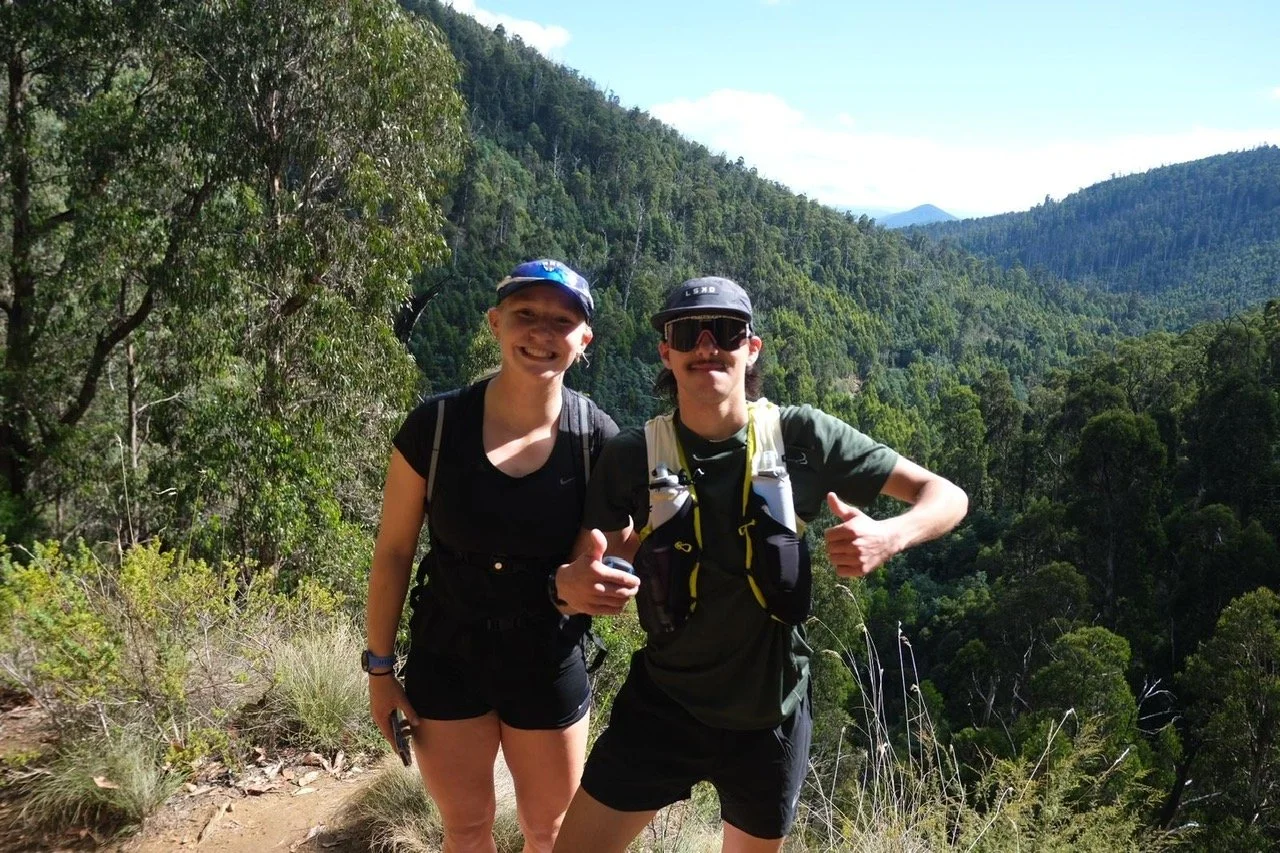
Low pressure, high reward: Why trail races are perfect for junior athletes.
One of the challenges in coaching young athletes is managing performance expectations. Times, results, rankings and comparisons can accumulate into a kind of low-level anxiety that is counterproductive to long-term development.
Trail running events offer a genuine antidote to this. If you have never been to a trail race, the atmosphere is different. More relaxed. Walking up hills is not just accepted, it is expected and encouraged. Times are genuinely incomparable between courses, conditions and years. The emphasis is on experience, not outcome.
Prior to our first trail adventures in 2024, very few of our athletes had ever tried trail running. They are now more confident running on rugged terrain and are regularly enjoying their local Victorian trail races.
At events like the Rapid Ascent Trail Running Series, athletes of all ages and abilities are welcomed and for our athletes, this creates a space to push themselves without the same weight of expectation or comparison. We have been really impressed with how they have tried new courses, distances, taken the tumbles and challenged themselves all whilst having a bit of fun.
Time in nature builds squad connections
Some of the best squad-building moments have happened out on the trails. There is something about sharing a new experience, being slightly out of your depth together, in a beautiful place, that equalises things between older members of the group and the younger ones. Everybody is in it together and the usual hierarchy doesn’t exist. On our adventure to Marysville, we watched our youngest athletes chatting easily with our oldest, something they would never do at school, but the environment and their more relaxed approach to the task at hand, created a more level playing field.
Trail running connects to school cross country
Winter is cross country season for most Melbourne schools. Trail running, with its variety of hills, mud and technical terrain provides some of the best specific preparation possible for school cross country events. It’s also harder than most cross country courses! There is also that variety to keep things interesting for junior athletes with curious minds, so rather than doing reps of the same grass oval, they are in nature adventuring with their friends. It’s a totally different head space to be in, whilst still getting specific training done.
We have consistently found that athletes who have done trail running through the winter approach their school cross country races with more confidence. The school courses feels more achievable and manageable compared to what they have already navigated on the trails.
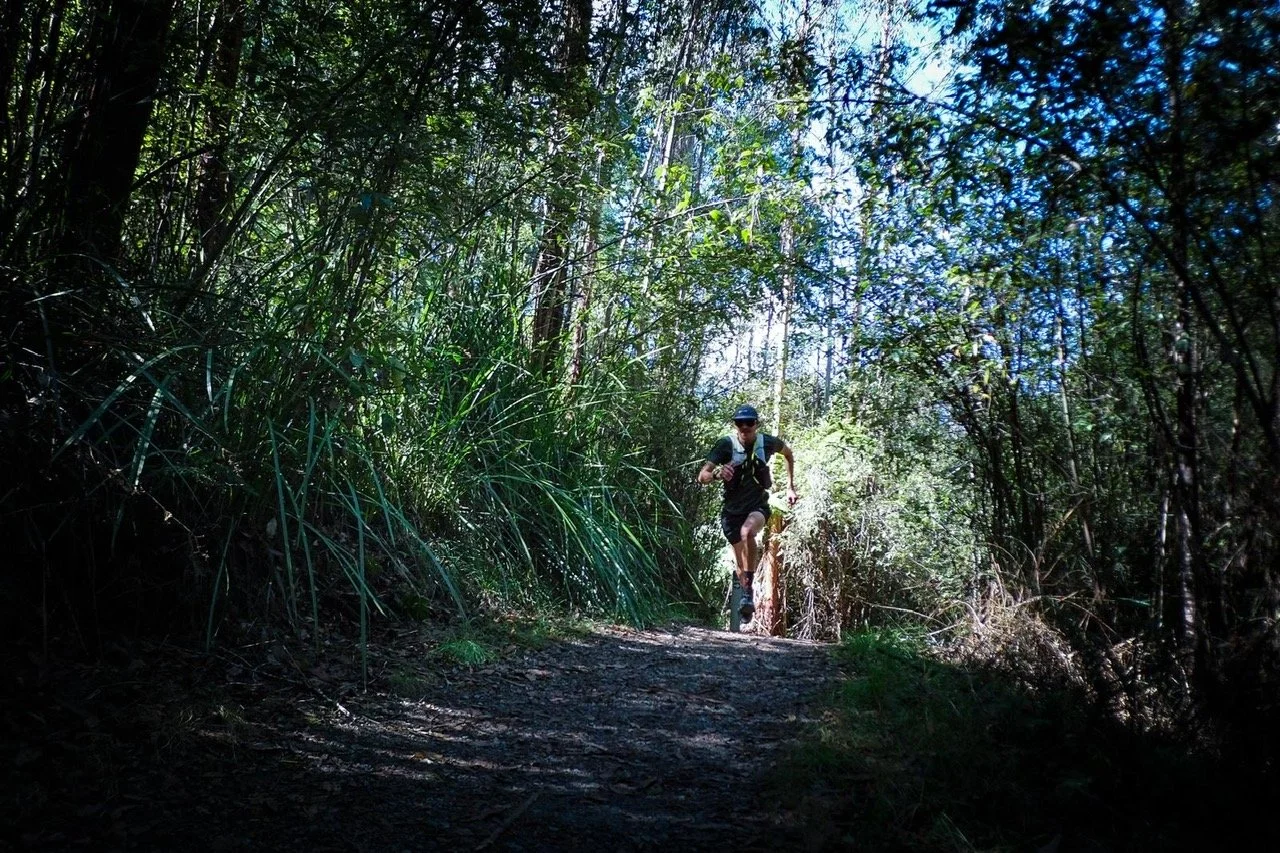
What's coming in 2026
This year we are taking the learnings from previous adventures and are excited to build on them. Our first Trail Adventure of 2026 is already lined up for Studley Park on 23 May. That will be followed by event 1 of the Rapid Ascent Trail Running Series (31 May), which in our view one of the best junior-friendly race series in Victoria, with short course options, a genuinely welcoming atmosphere and race venues that include Lerderderg State Park, Anglesea, Silvan in the Dandenong Ranges. We are really excited to get started on this!
You can find out more about our past trail running adventures and health and wellbeing projects at Momentum Triathlon Academy on our Health and Wellbeing Projects page. If you have a junior athlete who would love to be part of this program in 2026, please get in touch with chris@momentumtriathlon.com we would love to hear from you.