
All About The Bike: Life On A Tandem
Following on from our first blog Side by Side, where we explored what guiding in Para-Triathlon really involves, we are going deeper into one of the most talked-about pieces of kit in the sport, the tandem bike.
We get more questions about the tandem than almost anything else. So for this blog, we asked Coach Sam, MTA athlete Patrick, Guide and bike mechanic Benson, and MTA Pro Athlete, Skye to help paint a real, honest picture of the tandem and what it’s like to ride.
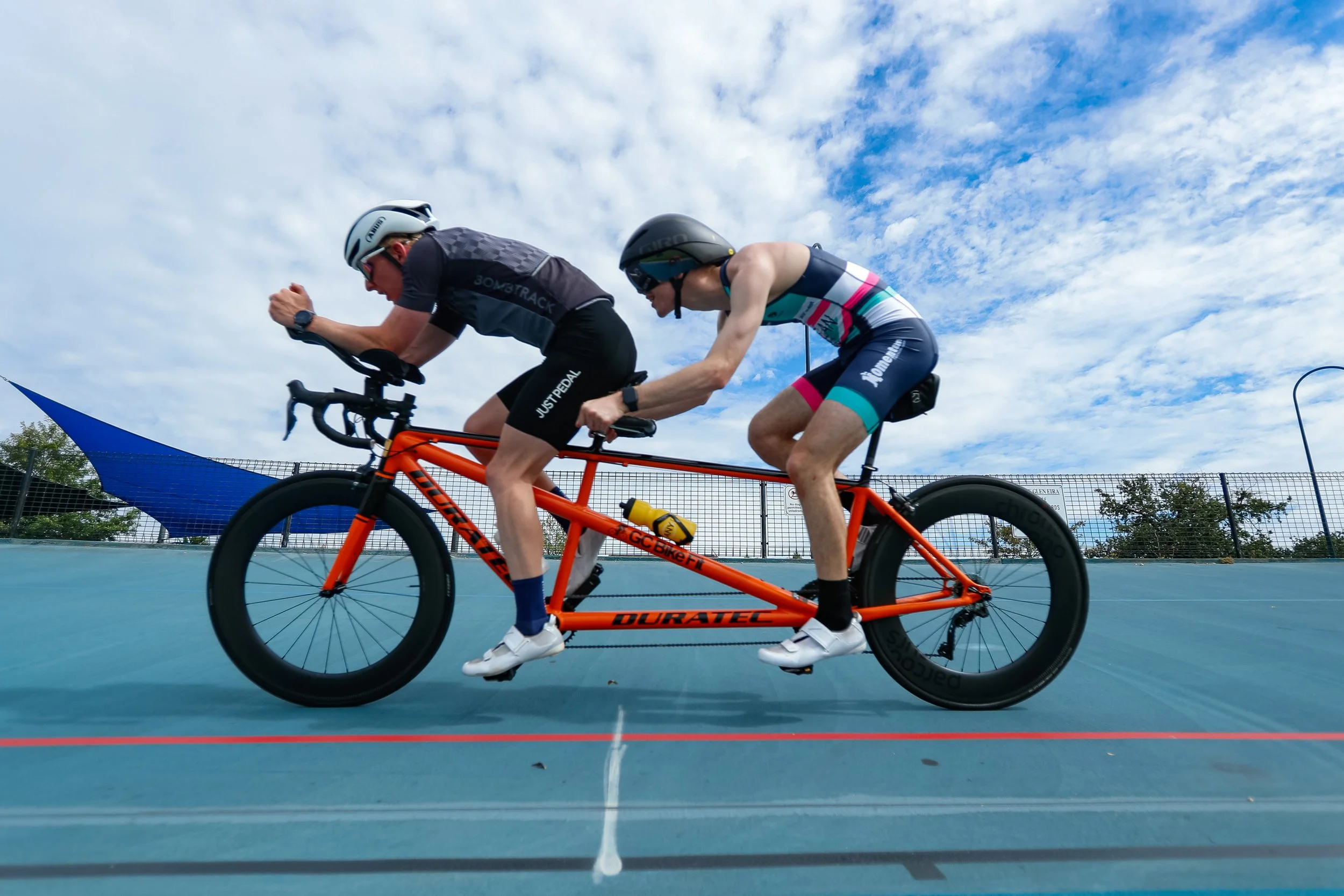
Why the tandem gets so much attention.
There is something magnetic about seeing the tandem go past in a race. It is a head-turner and is totally different to any other bike on course. It demands a different level of coordination and communication that is immediately obvious even to the casual observer. At MTA, both of our visually impaired athletes, Maggie and Patrick, compete on tandems with their guides. Each pairing is different, each bike is different, but each partnership, in order to get the most out of the bike, relies on a huge amount of trust.
What makes a tandem different? Benson, MTA Coach, Guide and Bike Mechanic
To understand what it feels like to ride a tandem, it helps to first understand how it is built and how it works. Benson, who guides Patrick and also has a bike mechanic's eye through his work at Just Pedal, is perfectly placed to explain.
"Structurally, the bike has to manage the weight and power of two riders," Benson explains. "That means additional tubing in the frame for support, and reinforced spokes and hubs in the wheels. A lot of torque travels through the frame, wheels and drivetrain. It's a fundamentally different beast."
On a tandem, both sets of cranks are connected by a fixed gear chain, which then connects to the standard drivetrain at the rear. The result? Both riders must pedal at exactly the same time, with the crank position identical throughout the entire pedal stroke. Power output works as a combined average. If the pilot is producing 150 watts and the stoker 200, the drive to the rear wheel is approximately 175 watts. It is a shared effort in the most literal sense.
Benson and Patrick have also fine-tuned their setup to account for their different natural preferences. "We use different crank lengths. 165mm for me as the pilot and 172.5mm for Patrick as the stoker, which helps us both feel comfortable across a compromised cadence range. I naturally prefer a higher cadence and Patrick prefers a lower one, so those different lengths adjust the feel for each of us."
The bike's weight is significant too. Patrick's aluminium tandem weighs around 15kg, which is roughly the equivalent of two standard road bikes. Maggie and Lauren ride a carbon frame, which is not only lighter but stiffer, allowing for higher power transfer. That combined weight has a real effect on how the bike behaves. "It takes a lot of power and time to get up to speed," Benson says, "but once you're there, it holds speed really well. Slowing down takes much longer too, so reading the course ahead is critical for the pilot." Cornering is another adjustment entirely. With a much longer wheelbase than a standard bike, Benson likens it to the difference between driving a car and a bus. Turns require coordinated body weight shifts from both riders simultaneously, and low-speed handling during mounting, dismounting or U-turns can feel unpredictable until both riders are comfortable with the feel of the bike together. "Overall," Benson says, "there's a lot more to think about than just hopping on and pedalling!”
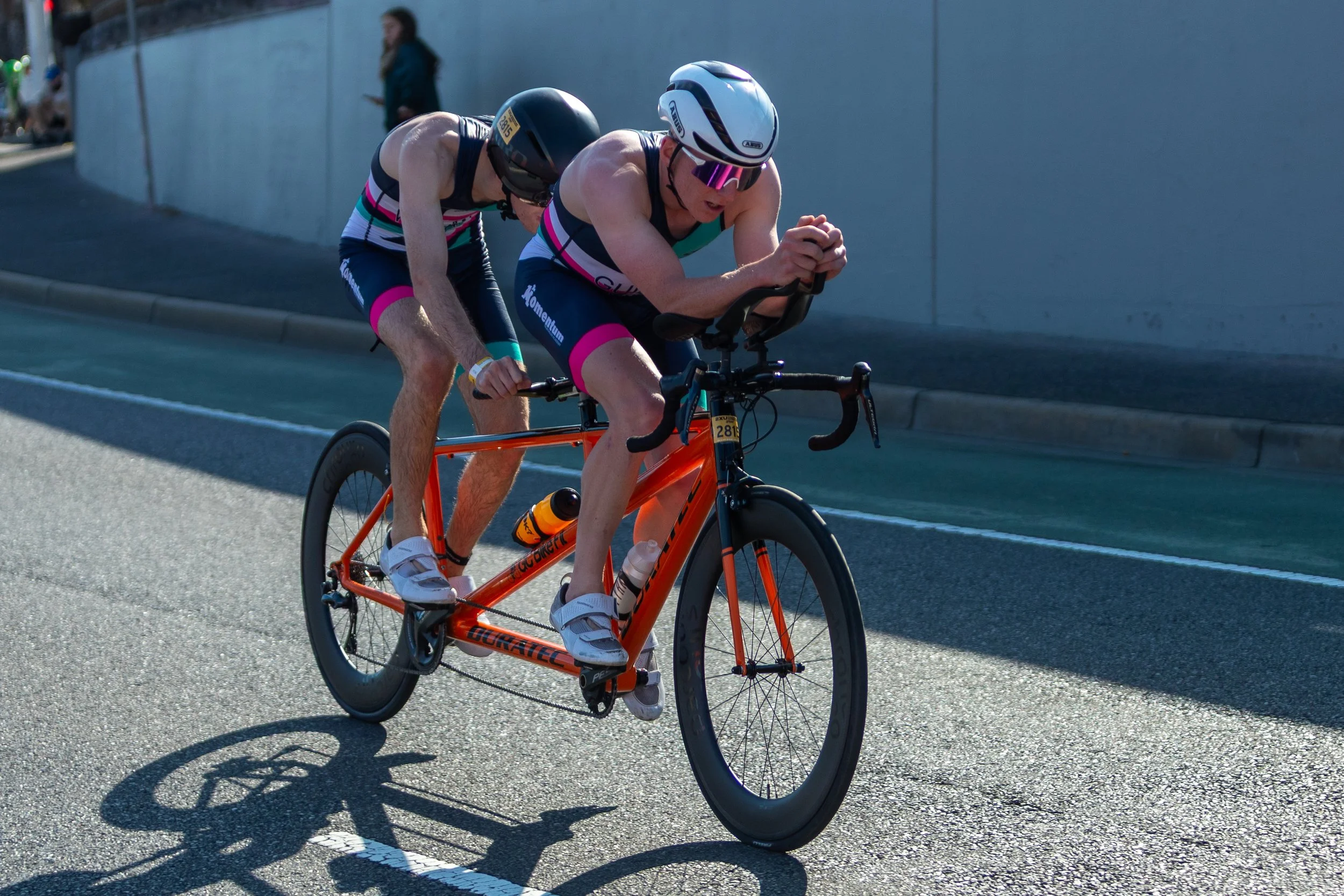
The first time on the tandem. Skye, MTA Pro Athlete & Squad Member
For most people who have only ever ridden solo, riding the tandem is a big shift and not always in the way you might expect. MTA Pro Athlete and Squad member, Skye recently got her first taste of life in the ‘drivers seat’ of the bike, and her reaction will resonate with anyone who has tried it. "Riding the tandem was a really cool and slightly nerve-wracking experience! Getting onto the bike and creating the momentum to get going is by far the hardest part. I was definitely a little wobbly starting out."
Beyond the physical challenge, what struck Skye most was how much conscious communication riding the tandem demands. "It really makes you appreciate the communication required between athlete and guide. Things you do automatically like braking, stopping pedalling, changes in pace, when you're on your own, you now have to think about and verbalise, because the person behind you has no way of knowing otherwise."
That constant, active conversation between guide and athlete is so important to succesfully managing the tandem, which only really works when both riders are moving as one.
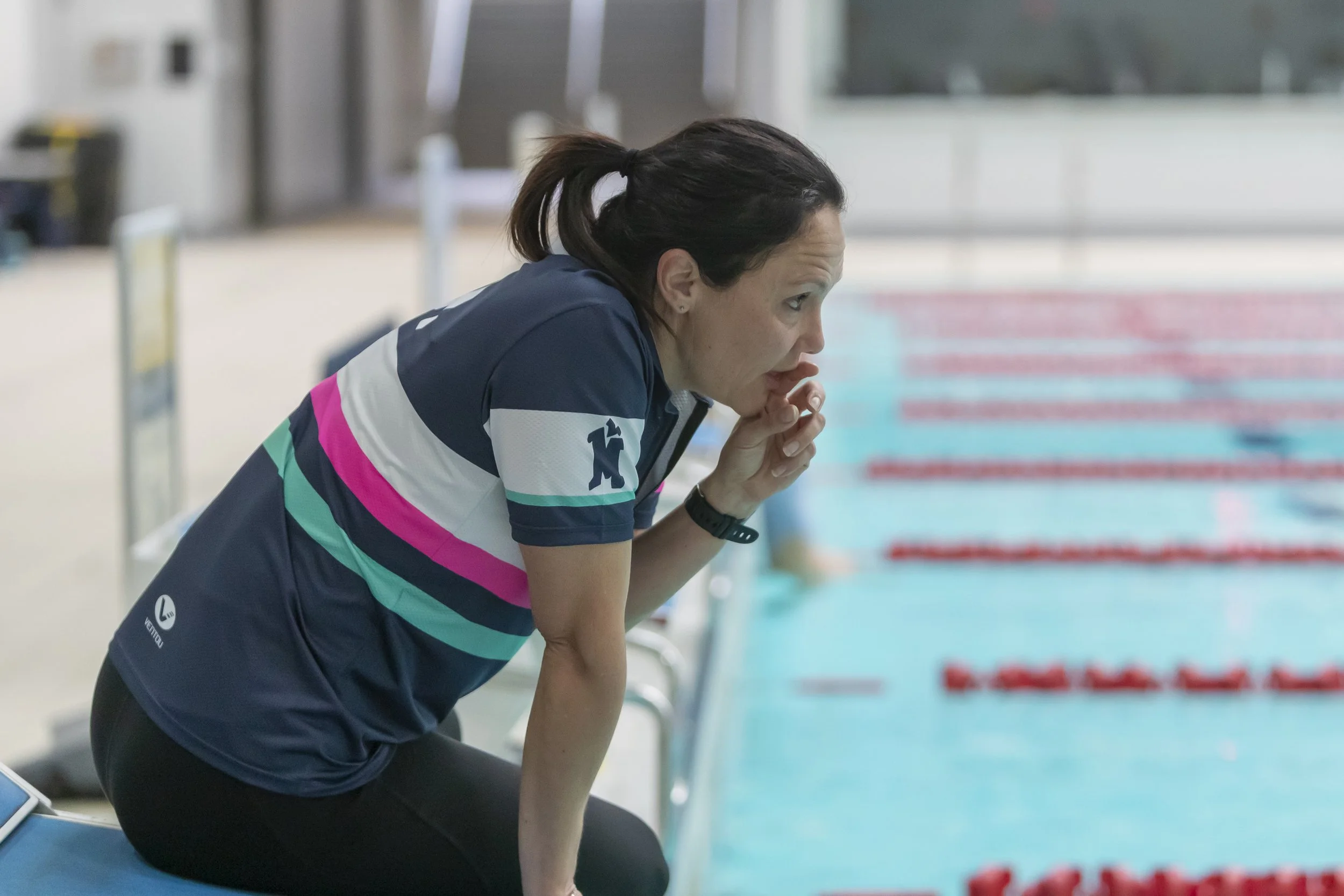
Building a partnership that works. Sam, MTA Director & Coach
As a coach working closely with both athlete-guide pairings, Sam has a clear view of what separates a tandem partnership that merely functions from one that truly gels.
"A great partnership on a tandem comes down to trust and time," Sam says. "Trust allows both riders to relax, move together, and work as one, but that trust has to be built over time."
Sam speaks from recent personal experience here. "I recently sat on the back of a tandem and I can tell you, it was mildly terrifying. I felt tense and didn't have full trust in the captain yet, and she could feel that immediately. That tension affected the handling of the bike and made things harder from her perspective. And that was after less than five minutes."
The implication for a full race is significant. Over the course of an event, without that foundation of trust, athlete and guide can find themselves working against each other rather than with each other. "That is neither comfortable nor efficient," Sam says.
Time on the bike together, learning how it moves, and practising how to move with it rather than against it are the main thing that gradually builds that trust. Practicing and learning verbal cues, shared routines, and a growing intuition for each other's rhythm doesn’t happen overnight, but when it does, the results speak for themselves.
What it feels like when everything clicks. Patrick, MTA Athlete
No one is better placed to describe the feeling of a tandem partnership working at its best than Patrick himself.
"When we are going well on the tandem, we are smooth, stable, and completely in sync," he says. "It feels controlled but fast. It feels reassuring to work together instinctively, trusting each other to execute our role." And the performance benefits are there to be seen when that cohesion is there. "When we are going well, we can go faster than road bikes, which is super fun."
"A good team, after all, is better than the sum of its parts."
That phrase captures something essential about tandem riding and about para-triathlon guiding more broadly. The tandem demands full contribution, full communication, and full commitment from both athletes.
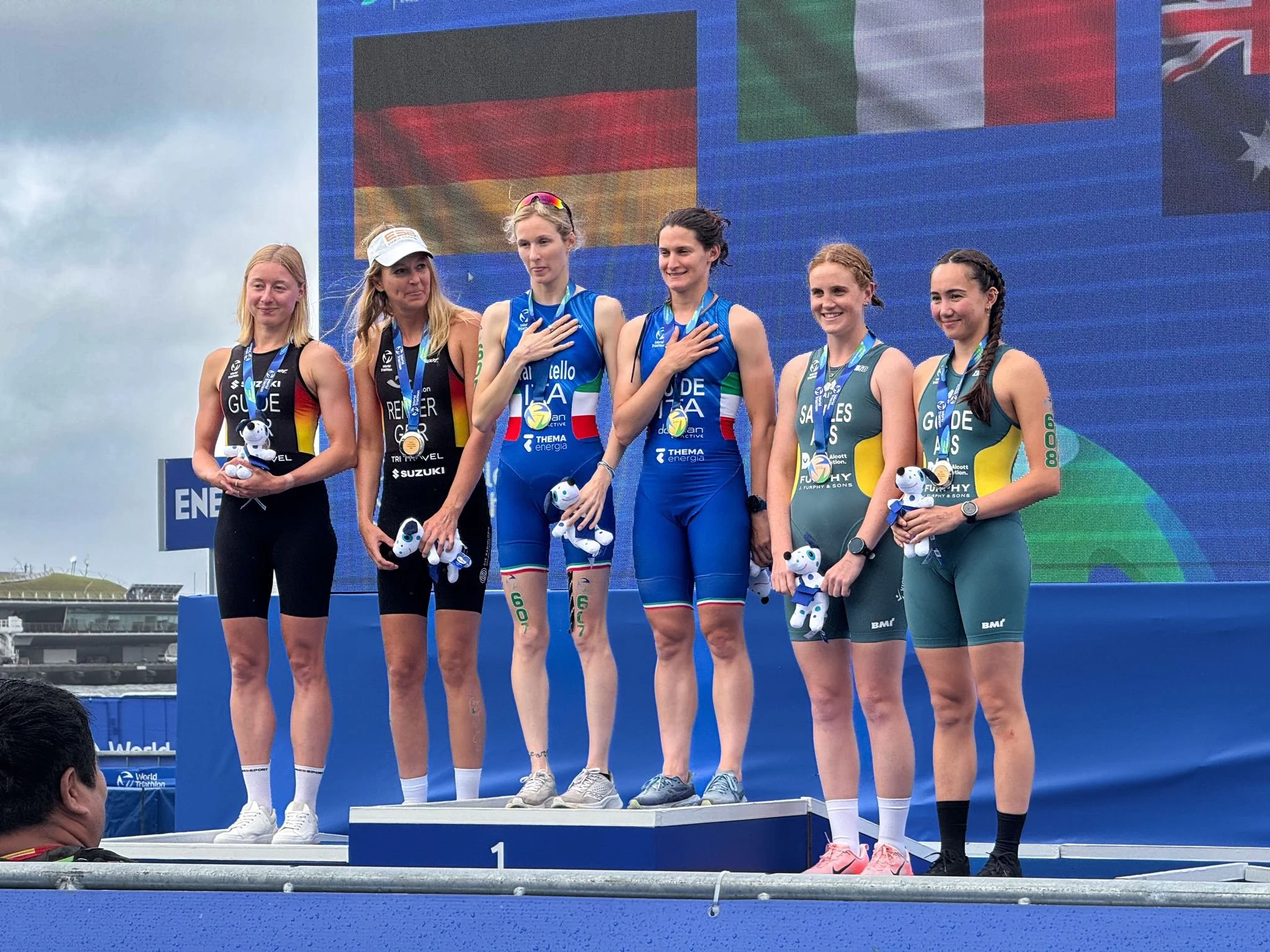
What this means for our athletes and their guides.
Every session our visually impaired athletes and their guides spend on the tandem is another deposit in the trust bank. The early wobbles, the communication slip-ups, the corners taken a little wide are all part of the process of improvement. What we see now is of course not perfect, but their progression so far, shows how improved partnership, communication and trust ultimately leads to faster bike times.
A huge thank you to Sam, Benson, Patrick and Skye for sharing their experiences and insights for this blog. Also a big shout out to Seb for his epic photos which help bring these blogs to life. If you have questions about para-triathlon, guiding, or the tandem specifically, we would love to hear from you!
You can read the first blog in this series, which covers the guiding role more broadly: here.