
Recovery Habits: The training most junior triathletes skip
If you want to train consistently and keep improving, recovery isn't optional. It's the part of training that most young athletes underinvest in, and it's the part that catches up with them eventually.
At Momentum Triathlon Academy we work with junior athletes from around age 10 through to young adults at university, training across Melbourne. Over the years we have seen junior athletes dig themselves into an energy deficiency hole when they prioritise their training but neglect the recovery habits that support it, like sleep, nutrition and adequate rest between sessions. Poor recovery leads to compromised sessions and before long they're sick or injured and unsure how they got there. They prioritise the visible part, which is the training, whilst neglecting the recovery that makes it all stick.
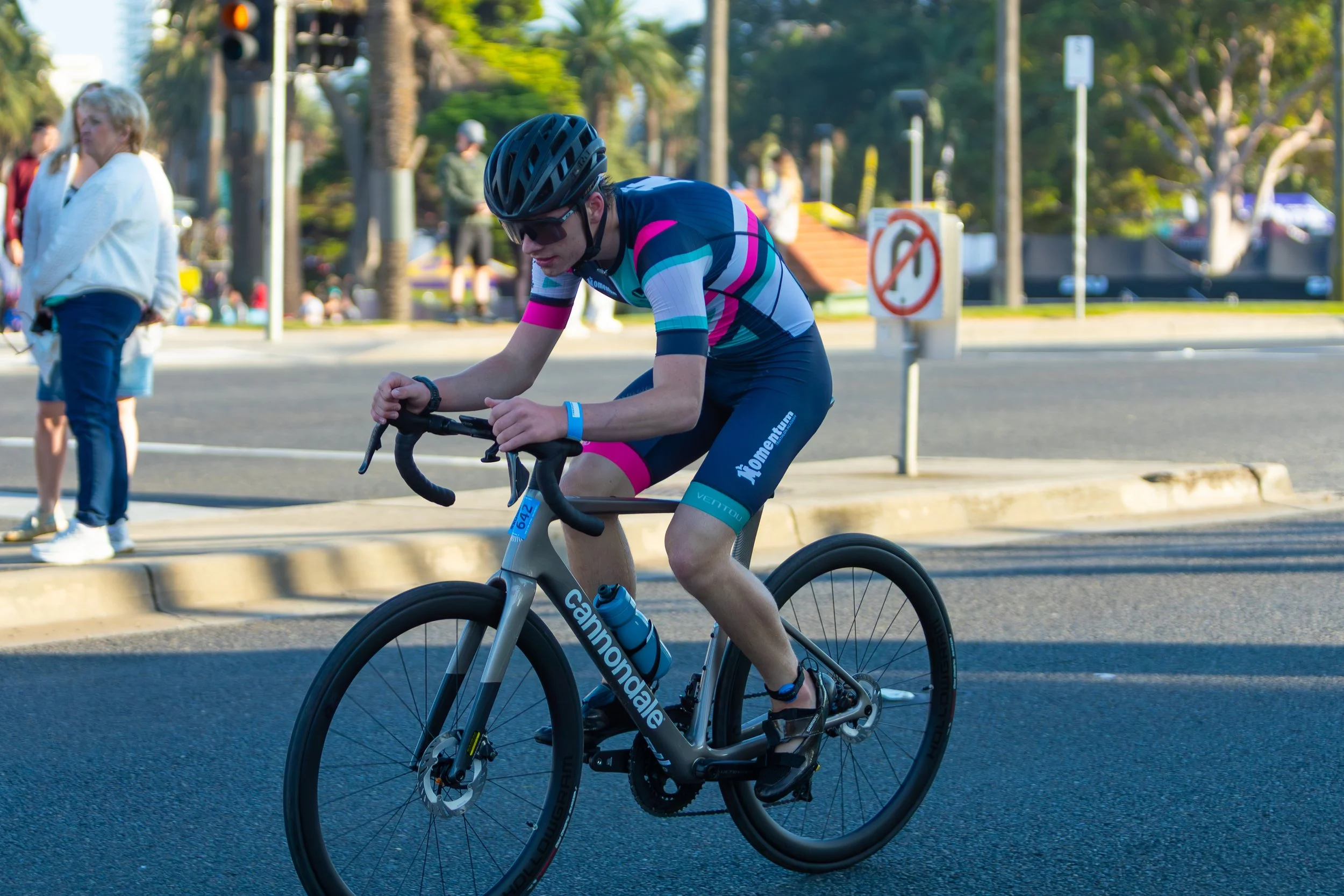
Why recovery is even more important for young athletes
Adult athletes who recover poorly tend to feel flat and make slow progress. For junior athletes, the consequences go a little further. Young bodies are growing as well as training, which means their energy and recovery demands are significantly higher than most parents and athletes realise.
During growth spurts in their early teenage years, bones are lengthening, muscles are adapting, and the body is working hard on multiple fronts simultaneously. Inadequate sleep and underfuelling during these phases are huge contributors to injury risk, not just performance dips. Our Young Athlete Wellbeing Coordinator Skye Wallace and Clinical Myotherapist Skye Meredith both work closely with our junior athletes to help them and their families understand that recovery isn't passive, it's something you have to actively build into your routine.
Building good recovery habits early, before training loads get serious, is one of the most valuable things a young athlete and their family can invest in. The athletes who figure this out at fourteen are the ones still racing and loving it at forty.
Goals without habits don't work
There's a quote we regularly cite at MTA: "You don't rise to the level of your goals, you fall to the level of your habits."
Most young athletes are great at the goals part. They know which race they're targeting, what team they want to make, what they're working towards. But goals without the right habits in place are just wishful thinking. When school gets busy, when motivation dips, when the alarm goes off early, it's habits that determine what actually happens, not goals.
Recovery is no different. Most junior athletes and their parents already know that sleep is important, that eating well helps, that rest days exist for a reason. Knowing that isn't the problem. The gap is between knowing it and then doing it consistently.
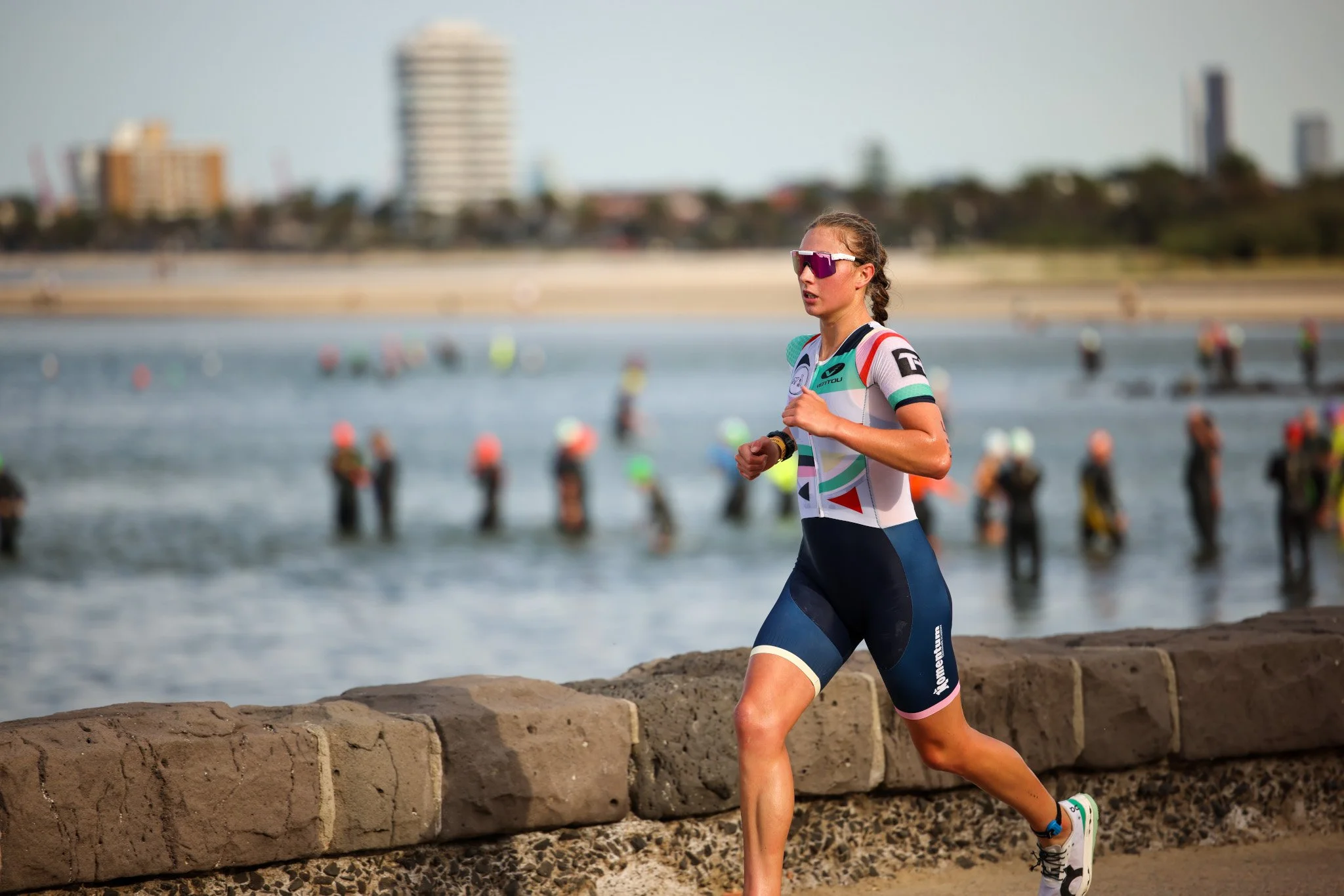
How to build recovery habits that actually stick
James Clear's research on habit formation, set out in his book, Atomic Habits, is as relevant to a fifteen year old athlete as it is to anyone else. The core idea is simple: a habit is more likely to stick if you can make it obvious, attractive, easy and satisfying. Here's how we see that playing out in practice for junior athletes.
Making it obvious means being specific. "I want to sleep more" is a goal. "I need to be in bed by 9pm because I'm up at 5:30am for training and I need eight and a half hours" is a habit. The more concrete the intention, the more likely it is to happen. Parents can help here by building consistent evening routines that make bedtime feel like a natural endpoint to the day rather than an interruption.
Making it attractive means finding something to look forward to in the recovery behaviour itself. If winding down before bed means a hot shower, some music and no screen time, that's genuinely enjoyable, not a sacrifice. The more young athletes associate their recovery routine with feeling good, the more consistently they'll do it.
Making it easy means removing friction from the behaviours you want more of, and adding friction to the ones you want less of. Late night phone scrolling is one of the most common things costing junior athletes sleep. Charging the phone in another room or setting a screen time limit are all small structural changes that outperform willpower every time. Parents can make a real difference here by setting up the environment at home to support good habits rather than relying on their child to resist temptation on their own, which stacks the odds against them.
Making it satisfying means noticing the connection between recovery choices and training performance. When a junior athlete sleeps well, eats well and shows up to a session feeling genuinely ready, that feeling is the reward. Helping young athletes recognise that link between what they do the night before and how they perform at training the next morning is one of the more powerful coaching conversations we have. It's something Skye Wallace, our Young Athlete Wellbeing Coordinator, will be focusing on in her work with our squad, and Skye Meredith reinforces it from a clinical perspective in her work with athletes managing fatigue and injury.
A practical starting point for families
Rather than trying to change everything at once, pick one recovery habit and start there. In our opinion, sleep is almost always the highest leverage place to begin. Work out what time your child needs to be in bed to get their eight hours, and build the evening around that one fixed point. Once that's consistent, layer in the next habit. Small wins, repeated consistently over time, compound into the kind of development that produces results not just in the next race but for years to come.
Want coaching that takes the long view?
At MTA, recovery is built into how we program our training and is discussed every day at sessions with our young athletes. If you're looking for a junior program in Melbourne that takes athlete wellbeing seriously, we'd love to talk. Visit our junior coaching page to find out more about how we work.