
How to fuel a junior triathlete: a practical guide for parents and athletes
If you are training several times a week, what you eat is important. It is part of training. A junior athlete who is consistently underfuelling will not recover well between sessions, will be more vulnerable to illness and injury during growth phases, and will struggle to improve regardless of how well they train.
We have known this for a long time at Momentum Triathlon Academy, working with our junior athletes across Melbourne, but we wanted to create a meaningful learning experience for our juniors to help them fuel well. To do that, we decided to work with Michael Chapman, an accredited public health nutritionist who works with athletes and in population health programs. We invited ‘Chappo’ to two of our training camps to work directly with our junior squad. What Chappo brought to our athletes was practical, evidence-based and genuinely memorable for coaches and athletes alike.
Learning by doing: the supermarket challenge
At our first training camp, Chappo set our athletes a supermarket challenge. We created a Momentum Supermarket with real products, where teams were sent into the aisles to find specific products, food types, compare labels, and work out what was actually in what they were buying. Our athletes were actively solving problems, debating with each other, and making decisions in a realistic environment. Excellent learning for real life scenarios when they might be travelling for a race, for example. The goal was to teach athletes the difference between marketing and nutritional information. The main message: The front of a packet tells you what a brand wants you to believe. The nutrition information panel on the back tells you what is actually in the food.
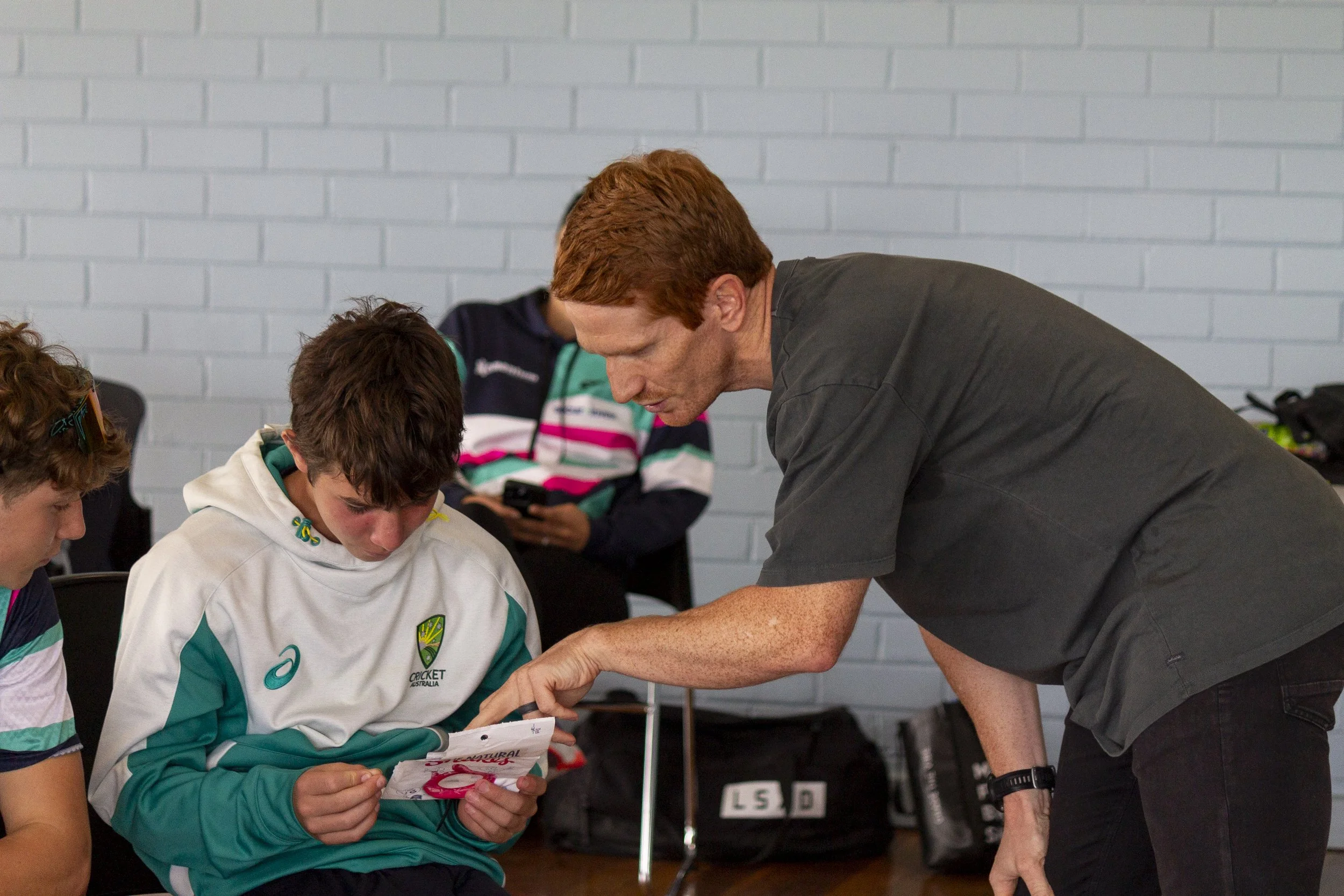
Chappo's guidance on reading labels was straightforward and practical. When comparing similar products, use the per 100g column rather than per serve, since serving sizes vary between products. Check the ingredients list, which runs from greatest to smallest by weight. If something high in fat, sodium or added sugar appears in the first three ingredients, that tells you something important about the product regardless of what the front of the packet claims.
Learning by cooking: feeding each other
At our next training camp, Chappo raised the stakes. This time, our junior athletes cooked!
He arrived with ingredients already bought and divided the squad into teams of three or four athletes. Each team was given a recipe and had to prepare a simple, nutritious meal from scratch. When the cooking was done, the teams ate what the other teams had made. Every athlete in the squad was responsible for feeding someone else.
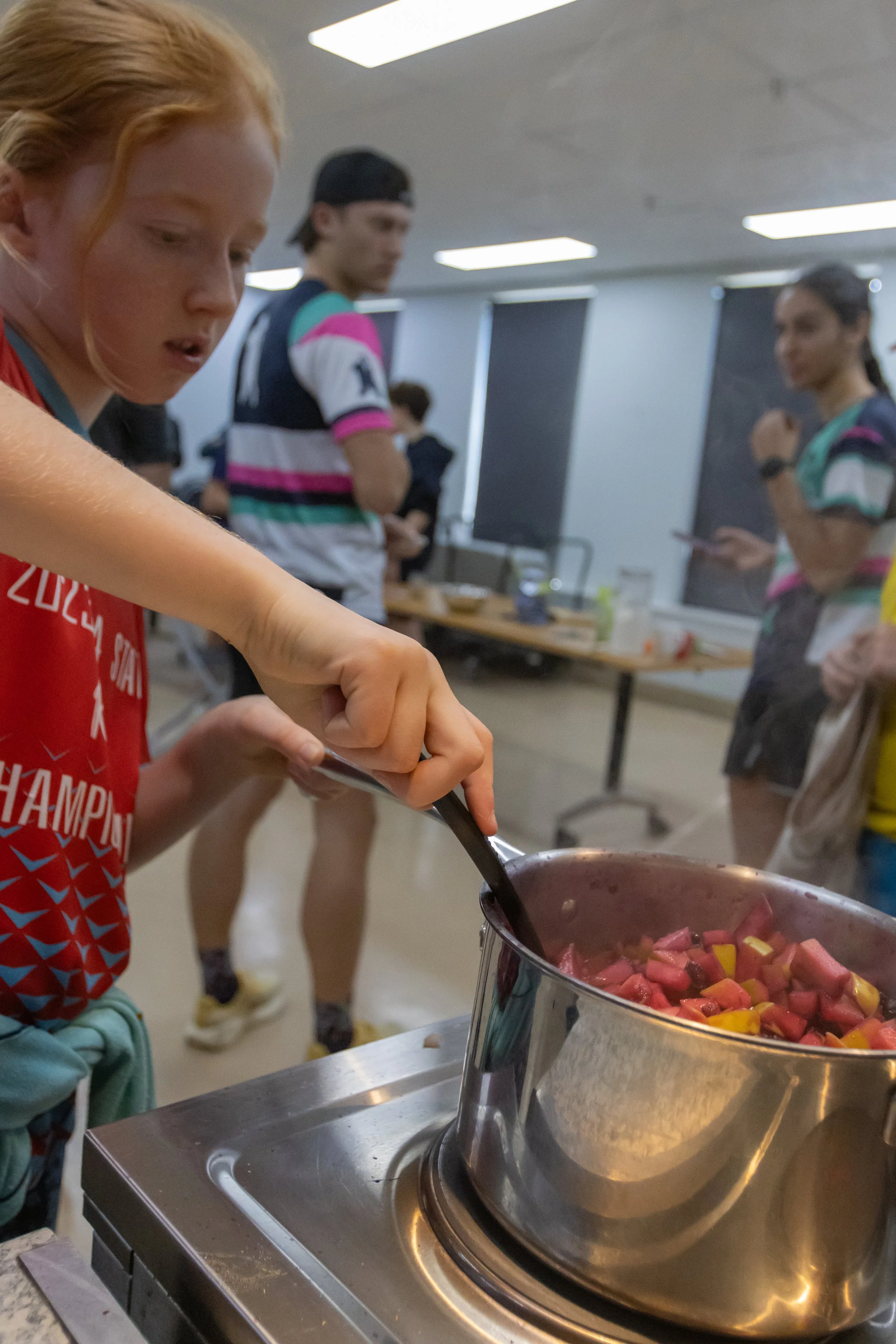
The meals were straightforward including pizzas, pastas, breakfasts and an apple crumble. Nothing that required culinary training. But that was the point. Chappo chose recipes that were practical for teenagers to make at home and that ticked the nutritional boxes. As well as being fun, the conversations from the cooking session, about ingredients, about what made one meal more useful for fuelling our training than another, were excellent learning all round.
The two sessions built on each other. The supermarket challenge taught athletes how to read and evaluate food. The cooking session taught them what to do with that knowledge.
Start with the base, not the sprinkles
Across both camps, one framework Chappo kept returning to was what he calls the cupcake analogy, and it has stayed with our coaching team ever since.
Think of your nutrition as a cupcake. (mmmmm!) The base is the most important part. It is the fundamentals: proper hydration throughout the day, eating nutrient dense whole foods regularly, good protein sources, unsaturated fats and wholegrain carbohydrates. Without a solid base, nothing else matters much.
The icing is the next layer. This is more specific nutrition around training sessions. Fuelling correctly before a session, rehydrating and refuelling afterwards.
The sprinkles are things like supplementation. They get a lot of attention on social media and in sports marketing, but without the base and the icing already in place, they offer very limited additional benefit. Most junior athletes would get far more value from nailing the base than from chasing sprinkles.
It sounds obvious when you put it that way. But that's not always the case. Getting the base right first is the most impactful nutrition change most junior athletes can make, and it is something parents can actively support by making sure the right foods are available at home throughout the week.
Fuelling around training: the two hour and half hour rule
A second practical framework that Chappo shared was a simple timing rule for nutrition around training sessions.
Two hours before training, the goal is a carbohydrate rich meal that is low in fibre and saturated fat, to allow proper digestion. Toast, rice, oats or cereal with some protein are all good options. About half an hour before training, a smaller, easily digestible carbohydrate source helps top up energy levels without causing stomach discomfort. A banana, some dates, a gel or a sports drink all work well here.
The same two hour and half hour window applies after training, just in reverse. In the half hour after finishing, the priority is protein that is easy to consume, ideally with some carbohydrates and fluid. A chocolate milk or smoothie is a practical option many of our athletes use. Within two hours after that, the next proper meal should tick off protein, carbohydrates, hydration and electrolytes together.
For parents, this timing window is worth understanding because busy family schedules often mean athletes needing to adapt. Missing that recovery window consistently means slower recovery and lower energy levels. For young athletes, it means getting into the habit of planning what you eat around your training, not just fitting training around whatever the family happens to be having for dinner.
Building a balanced plate every day
Beyond the training window, everyday eating sets the foundation everything else builds on. Chappo introduced our athletes to the plate rule as a practical visual guide. Half the plate filled with vegetables and fruit, a quarter with lean protein such as fish, poultry, eggs, legumes or nuts, and a quarter with carbohydrates aiming for lower glycaemic index options like bread, rice, quinoa or pasta. Water is the primary drink throughout the day, with the goal of keeping urine a light straw colour as a simple hydration check.
Low GI foods release energy more slowly, helping manage blood glucose levels and keeping athletes feeling fuller for longer throughout the day. Higher GI foods are useful in the days before a race when carbohydrate loading is the goal, and in the 30 minutes before a session when quick energy is needed. Knowing when to use which type is useful nutrition literacy for any junior athlete, and something parents can help reinforce at home.
What young athletes see online might not be helping them
There is an enormous amount of nutrition content targeted at athletes on social media. A lot of it is well-intentioned but poorly evidenced. Some of it is actively misleading. We wanted to work with Chappo to help our young athletes think critically about the nutrition content they consume online, and give them a skill that will serve them well beyond sport.
To do this, Chappo shared a framework called CRAAP for evaluating online information. CRAAP stands for Currency (when was it published?), Relevance (does it apply to your situation?), Authority (who wrote it and are they qualified?), Accuracy (is it supported by evidence?), and Purpose (is it trying to inform, persuade or sell something?). A quick check on those five questions before acting on nutrition advice from social media is a surprisingly effective filter. Beware of advice from someone on Instagram whose primary income is a supplement brand.
Thank you Chappo!
The whole MTA team of coaches and athletes thoroughly enjoyed working with Chappo. Nutrition connects directly to injury risk, recovery and long-term development of young athletes. We have covered the relationship between underfuelling and injury in more detail in our Managing Injuries guide, and the connection between recovery habits and consistent training in our recovery habits blog. You can find Chappo at chappo-healthnutrition.com and he comes very highly recommended by our coaching team!
Want coaching that looks at the whole athlete?
At MTA we believe that what happens outside training sessions matters as much as what happens inside them. If you are looking for a junior triathlon program in Melbourne that takes athlete wellbeing seriously, we would love to talk. Visit our junior coaching page to find out more.