
Life in thin air: learnings from an altitude training block
At Momentum Triathlon Academy, one of the things we are most proud of is our international connections and the life changing experiences that they create. Each year we welcome athletes from different parts of the world and some of our more experienced athletes get to see the world through their triathlon.
2026 is the third year that we have taken athletes to the thin air of the Swiss Alps on an altitude training camp. Skye Wallace, our Young Athlete Wellbeing Coordinator, a qualified Physiotherapist, and professional athlete is currently in St Moritz, Switzerland, in the middle of an altitude training block as she prepares for Ironman World Championships in October. We asked her to share what life at altitude actually looks like, including the science, the daily realities, the challenges, and the lessons. This is her story, in her own words.
After leaving Australia and heading to Europe to begin my race block, I have been lucky enough to spend the past few weeks in St Moritz, one of the world's most renowned altitude training destinations. This is my third time visiting the Swiss Alps, and I thought I would share my experience of life at altitude, the science behind it, as well as the everyday realities, challenges, and lessons that come with living and training in the mountains. I hope this gives you a better understanding of what life on camp is like, what to expect, and a few practical tips to help you make the most of it.
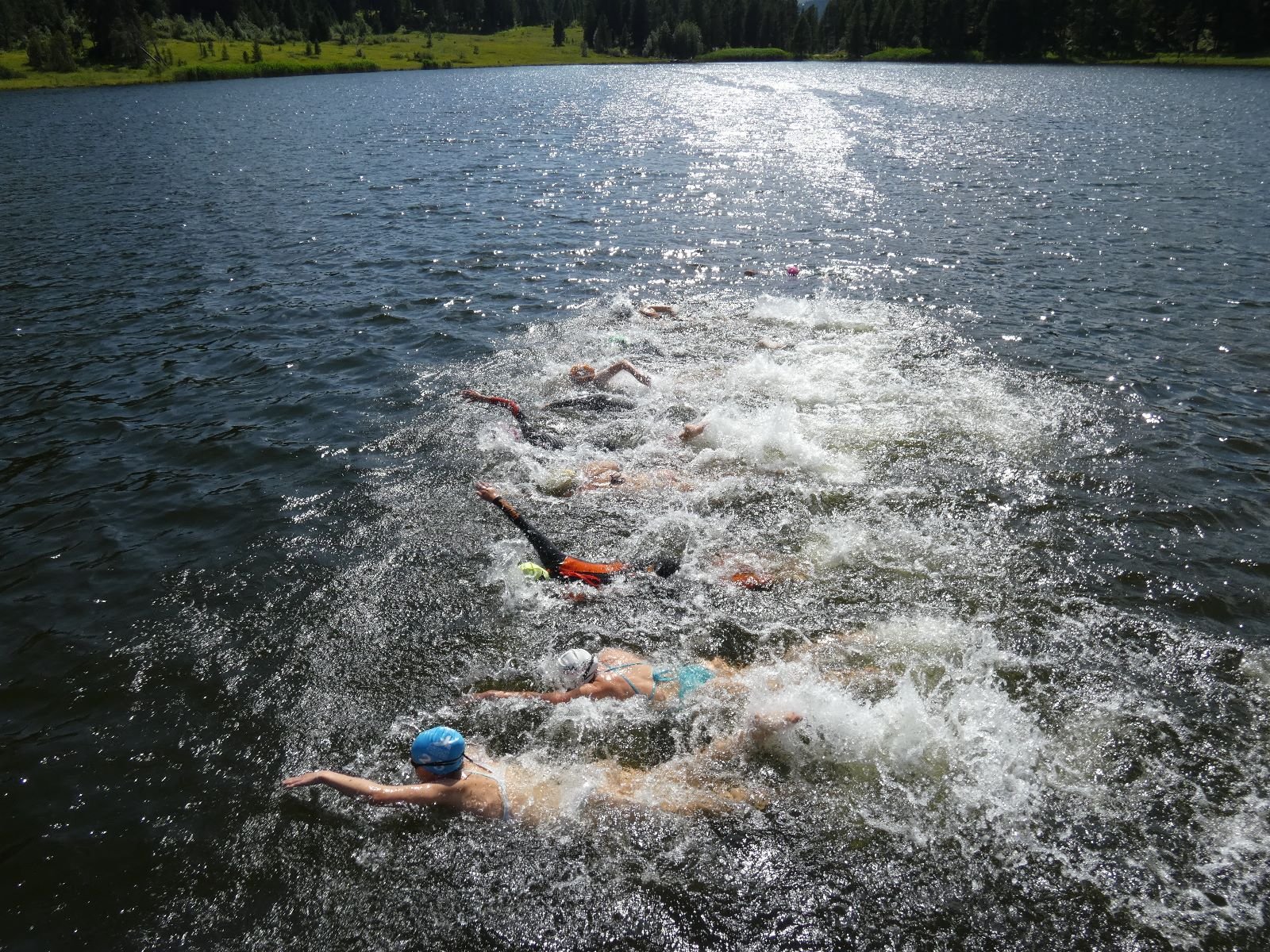
Why do athletes train at altitude?
Altitude training is a popular tool used by endurance athletes around the world to improve performance. Athletes typically live and train between 1,500 and 3,000 metres above sea level before returning to lower altitudes to race.
At altitude, the air pressure is lower, meaning there is less oxygen available with each breath. This makes it harder for your body to get oxygen into your bloodstream and deliver it to your working muscles. In response, your body begins to adapt by producing more erythropoietin (EPO), a hormone that stimulates the production of red blood cells. Over time, this increases your blood's ability to carry oxygen, helping your muscles receive more oxygen when you return to sea level and improving endurance performance.
The first few days: welcome to thin air
One of the biggest surprises I found when arriving at altitude was how much harder everything felt. At altitude, your body has to work harder to deliver oxygen to your muscles. Your breathing and heart rate increase at rest, which can make simple activities feel harder. I definitely noticed this on stairs and hills. Training also feels harder at altitude. With less oxygen available, your body has to do more work, meaning the same power or pace that feels comfortable at home can feel much more difficult in the mountains. That is why it is important to reduce the intensity and duration of training during the first few days and focus more on RPE than specific numbers. Some people can also experience temporary symptoms when going up to altitude like headaches. Personally, I struggle to fall asleep for the first couple of nights, but after that, my body adjusts well.
Fuelling the work
Talk to anyone who has been to altitude and they will tell you it makes you hungry. Your energy expenditure increases at rest as your body is working harder to deliver oxygen. Add two or three training sessions a day on top of that, and your energy requirements begin to add up.
I have found there is a lot less room for error in the mountains. At home, you can get away with sometimes skipping a meal or snack and still get through training feeling okay. But at altitude, you seem to notice the effects much sooner. If you do not eat enough, the training becomes a lot harder.
Another thing to consider is that there is often not much time between sessions, and after a long day of training, cooking can feel like the last thing you want to do. Having a few quick options in, like wraps, couscous, and frozen meals, or creating a big batch of meals at the start of the week, can be helpful so you are always able to put together a decent meal in just a few minutes.
Iron is another thing worth thinking about before heading to altitude. In order to create more red blood cells your body uses iron, so it is important to ensure stores are optimal. Many athletes will have a blood test to check their iron levels prior to heading up to altitude to make sure everything is where it should be.

The fine art of recovery
On camp, it is easy to focus on training, but your body is also working hard to adapt to the lower oxygen levels, so everything seems to take a little bit longer to recover from at altitude. This includes prioritising sleep. From experience, I can say one or two nights of poor sleep at altitude have a bigger effect than they would at sea level and can leave you feeling flat for training.
Another thing to keep on top of is hydration. At altitude, you breathe faster and the air is drier, both of which make you lose fluid more quickly. I try to keep a bottle with me throughout the day to sip on rather than trying to catch up with big amounts at once. The air can also dry out your skin and lips, so my top tip would be to pack moisturiser and lip balm.
Finally, be patient with your training load. This can be one of the hardest parts of camp. You arrive feeling motivated, surrounded by training partners, and excited to make the most of every opportunity. It is very tempting to add just one more session or push a little harder than planned. However, altitude has a way of catching up with athletes who do too much too soon. I have seen teammates start camp feeling amazing, only to push too hard in the first week and struggle with fatigue for the rest of the trip. Respect the altitude, trust the process, and allow your body the time it needs to adapt. The patience will pay off.
A day in the life of camp
No two days on training camp are exactly the same, but you quickly settle into a routine that works for you. Most days revolve around training, eating, recovering, and preparing to do it all again the next day. To give you an idea of what life on camp looks like, here is a typical day for me:
6:30am — Wake up
7:00am — Breakfast
7:30am — Prepare bike and bottles
8:00am — Bike session: big gear reps
10:00am — Breakfast number two
11:30am — Ride to the pool
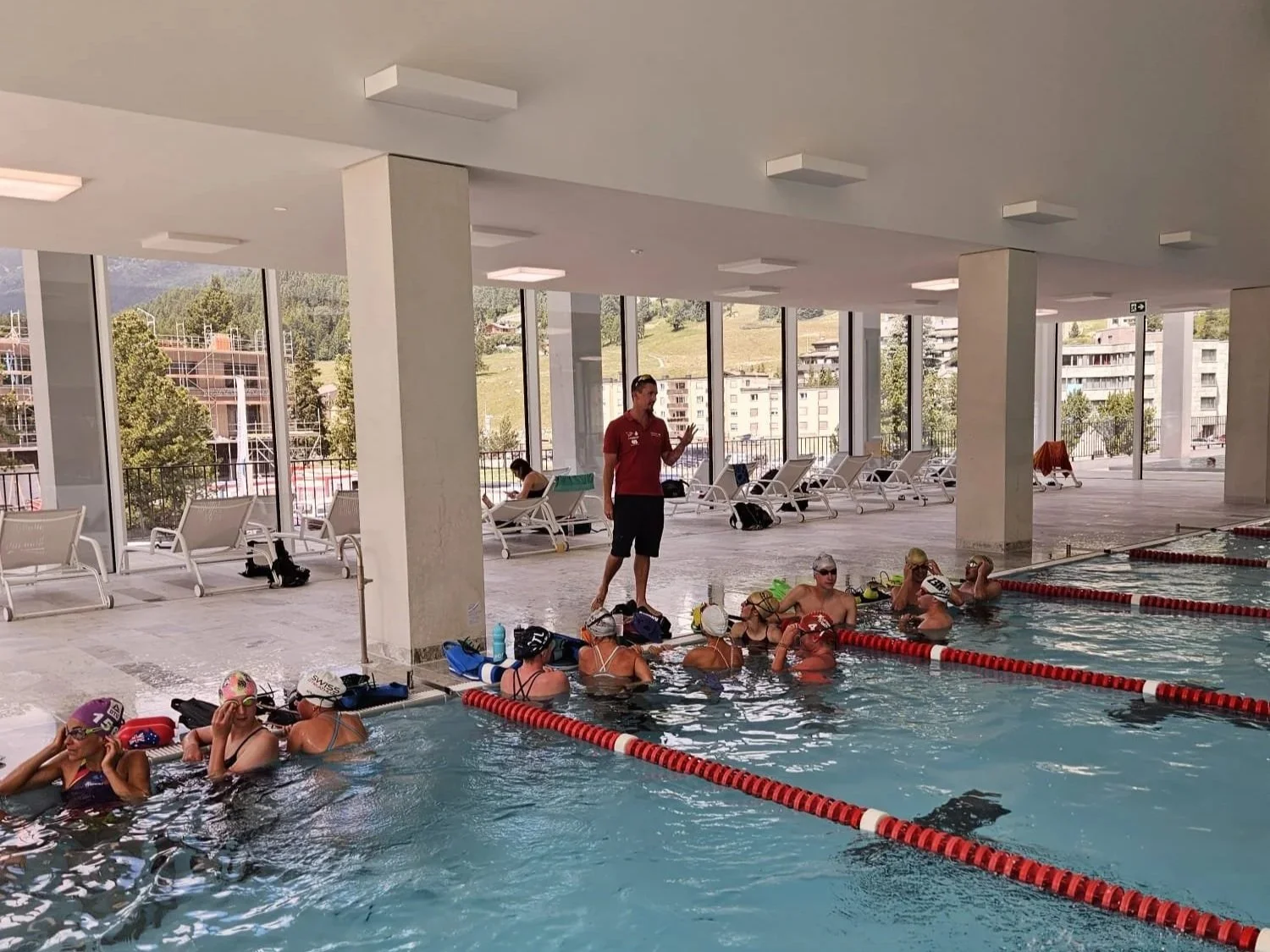
12:00pm — Swim session: aerobic 100s
2:00pm — Ride home
2:30pm — Lunch
4:00pm — Bike session: build ride
5:30pm — Home, shower, washing and chores
6:30pm — Prepare dinner
7:00pm — Dinner
8:00pm — Board game, chat with teammates, snack
9:30pm — Bed
Lessons beyond the training
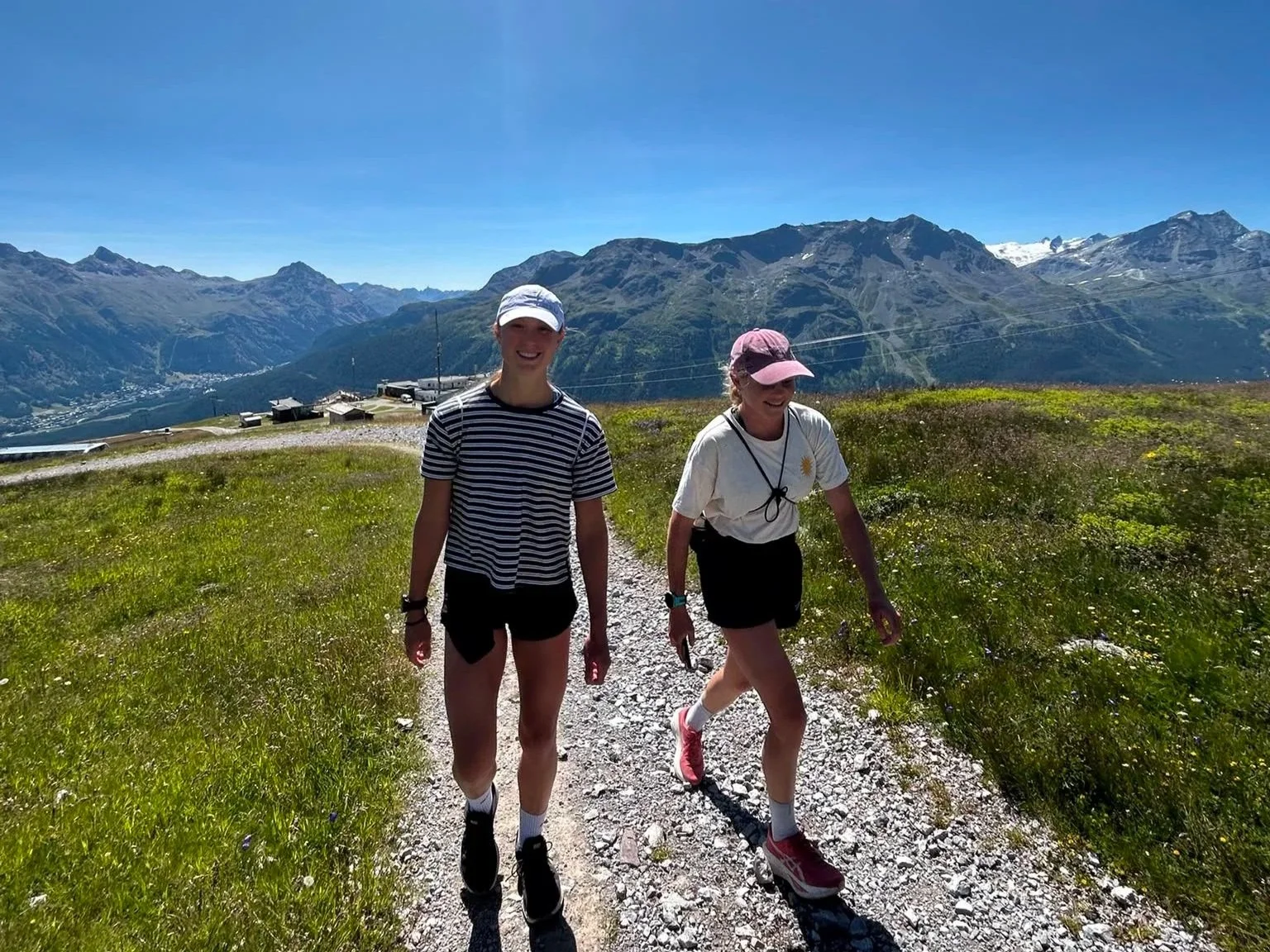
Training camp teaches you a lot more than just training. For many athletes, it is their first time living away from home and being independent. Suddenly, all those little jobs your parents tell you to do become your responsibility, and you quickly realise they were not just nagging you for no reason. From deciding what groceries to buy, planning and cooking meals, washing your clothes, organising transport, and keeping your accommodation tidy, there are countless everyday tasks that become part of your routine. While it can feel overwhelming at first, it teaches you a lot.
If you are going away on your first camp, it is a good idea to get some of these skills nailed before heading over and trying to learn how to shop, do the washing, or catch the bus for the first time when everything is in a different language.
The parts you do not see on socials
Some of my favourite memories have been made on camp, and I have learnt so much, not just about training, but about myself. You gain new perspectives, meet amazing people, and build friendships that last a lifetime. But it is important to remember that it is not always smooth sailing.
Training overseas comes with its own set of challenges. Being away from family and friends in a completely different environment can be difficult at times. The training itself can also be physically and mentally demanding. There are days when you are exhausted, your motivation is low, and stepping out the door feels like the last thing you want to do. Knowing you still have a six-hour training day ahead of you can feel pretty overwhelming.
While you get to experience incredible places, it is important to remember that you are there to do a job. A training camp is not simply a holiday, and it is not always glamorous. Particularly when you are overseas for an extended period of time, you will find yourself walking past restaurants serving the most amazing-smelling food while carrying your Aldi shopping home to cook another budget-friendly meal. You might watch people heading off on sightseeing adventures while you catch the bus to the pool or head out for another ride.
There is a funny irony to training in a place like St Moritz. It is one of the wealthiest places in the world, surrounded by luxury hotels, expensive restaurants, and incredible scenery, yet it is also filled with athletes working hard to stretch every last dollar, carefully budgeting, sharing accommodation, and doing whatever they can to chase their goals and make their opportunities a reality.
That said, the rewards far outweigh the challenges. You get to ride through some of the most breathtaking scenery imaginable, train alongside some of the world's best athletes, and create unforgettable memories with your teammates. The friendships you build, the resilience you develop, and the experiences you gain are things you will carry with you long after the camp is over. Looking back, it is often the tough days that make the good ones even more rewarding.
Final thoughts
If there is one thing I have learnt from training at altitude, it is that the biggest benefits are not always the ones you can measure. Yes, you may return home fitter, but you also return more independent, resilient, and with a greater understanding of yourself as an athlete.
Some of my favourite memories from camp are not necessarily from the hardest training sessions. They are the moments in between, eating dinner with teammates, jumping in the river after a track session, laughing over a card game, or looking around during a ride and appreciating how lucky we are to be doing what we love in such incredible places.
Training camp will challenge you. There will be hard days, tired legs, moments where you miss home, and sessions where motivation is nowhere to be found. But those moments are often where you learn the most about yourself.
So, if you ever get the opportunity to go on camp, embrace it. Arrive prepared, be patient with yourself, and enjoy every part of the experience.
Skye Wallace, MTA Young Athlete Wellbeing Coordinator
Want to follow Skye's journey or find out more about MTA?
We are incredibly proud of everything Skye is achieving and the example she sets for every athlete in our community. If you would like to find out more about training and developing with MTA, visit our junior coaching page or get in touch with Chris and Sam directly.