
Managing injuries in junior triathletes: a guide for parents
At Momentum Triathlon Academy we work with junior athletes from across Melbourne, from 10 year olds in primary school, through to young adults at university. We’ve seen our fair share of growth-related soreness, as young athletes grow and their bodies change through adolescence. We've learned that spotting the signs early and helping young athletes to articulate what they are experiencing is extremely important to successfully managing their aches and pains in the longer term.
Being able to feel the difference between an ache, a tightness, a pain or a soreness in their body is key. If young athletes can’t do that, it becomes more difficult to articulate the issue to parents or coaches and therefore it is difficult to know what we should be more or less concerned about.
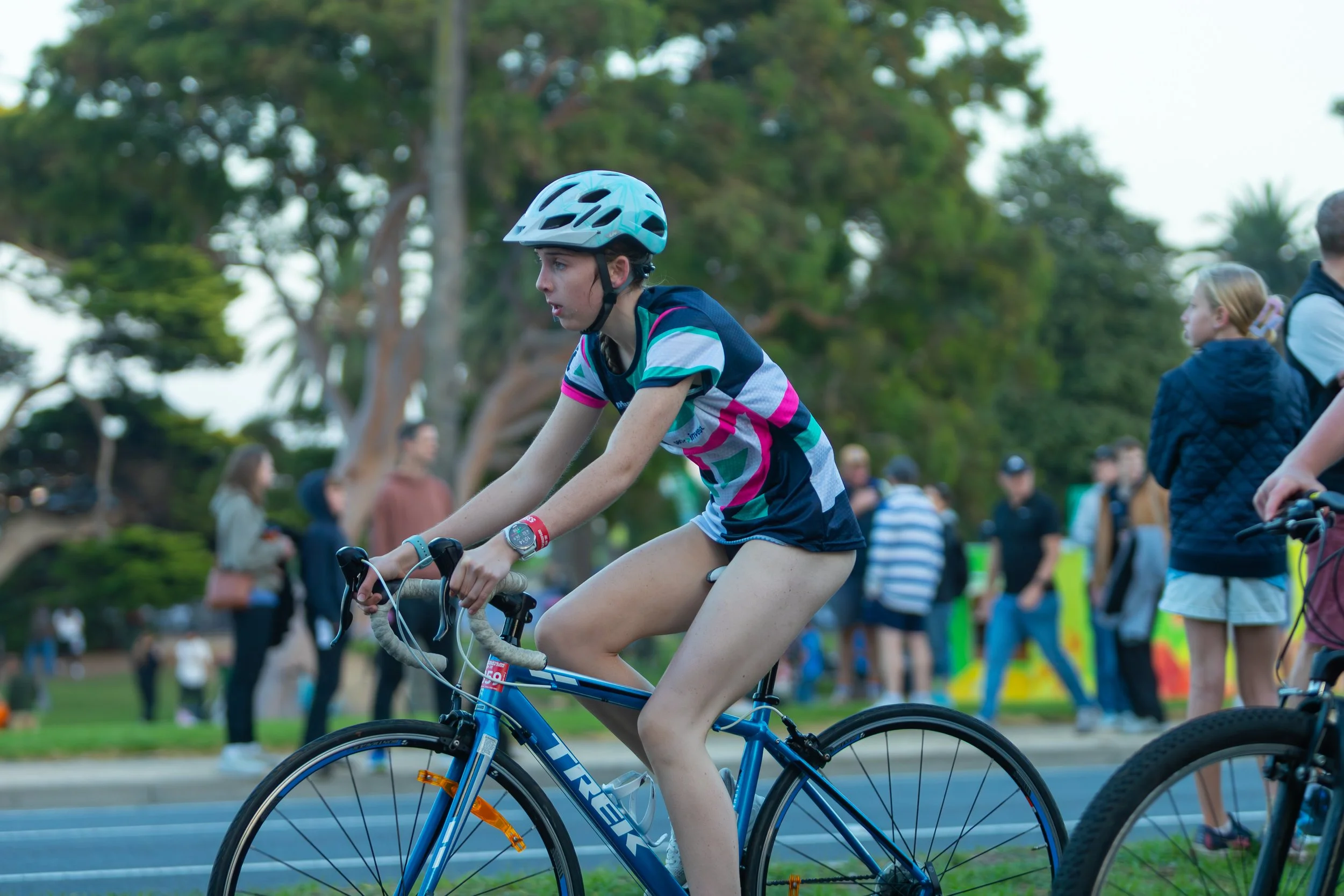
Soreness and pain are not the same thing
This sounds obvious to more experienced athletes or health professionals, but it is a source of confusion we encounter in coaching younger, less experienced athletes. For example:
Some muscle soreness after a hard session is a normal, healthy response. It tends to arrive the following day, affects both sides of the body similarly, and eases once an athlete warms up. It's the body adapting and getting stronger.
Pain is different. It's usually more localised, more persistent, and less predictable. It might appear during a session rather than after. It might not improve with warm up, or it might worsen as training continues. These are the subtle signals that are worth paying attention to.
Momentum’s Clinical Myotherapist, Skye Meredith and our ‘Young Athlete Wellbeing Coordinator’, Skye Wallace both reinforce this distinction in their work with our athletes. The earlier a parent or athlete can identify and describe pain accurately, the better the outcome. Vague descriptions like "my leg hurts" delay an accurate diagnosis. Specific ones like "it's sharp, just below my kneecap, and gets worse when I go up stairs" move the conversation forward quickly.
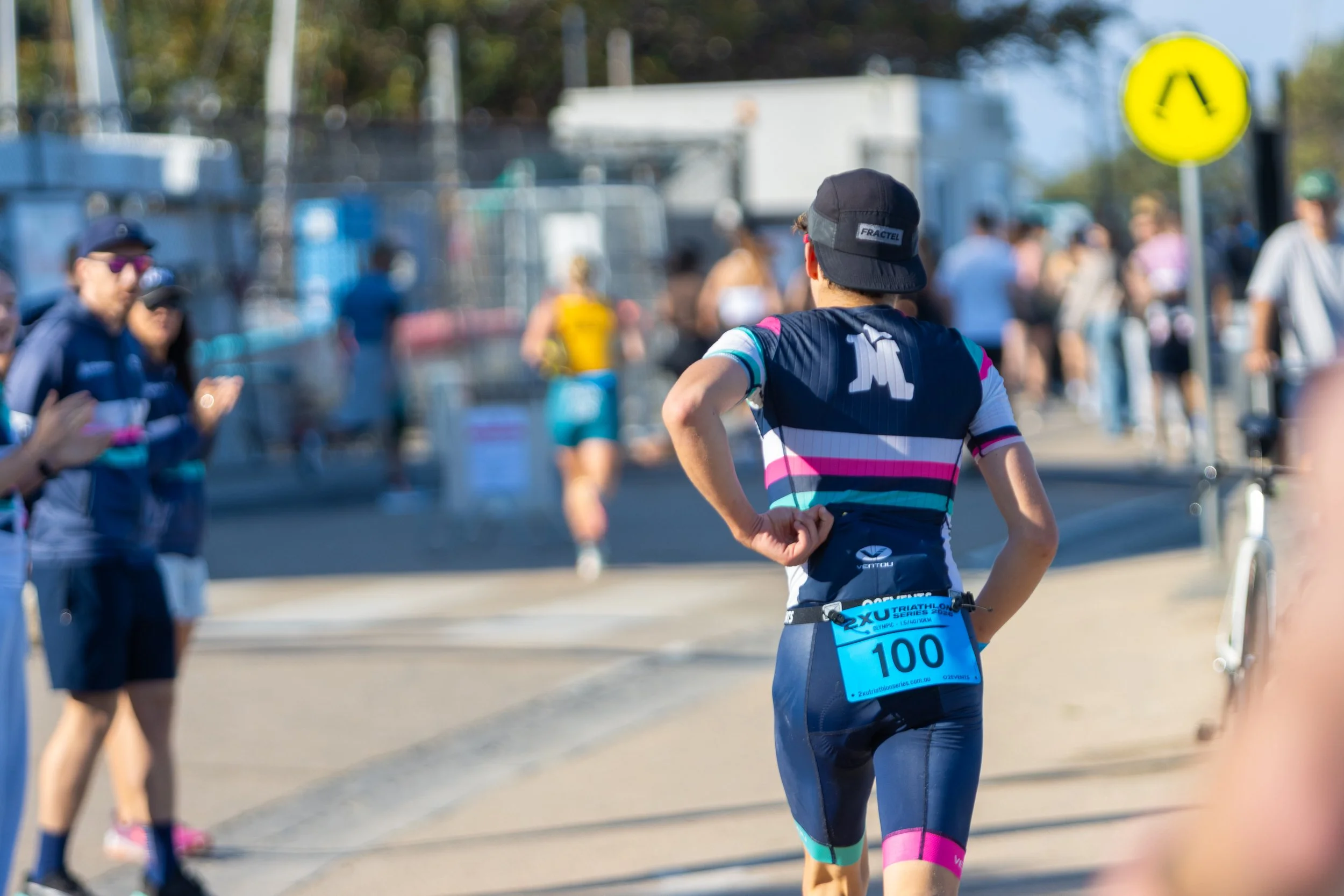
Why growth spurts change the game
Junior athletes are not small adults. Their bodies are changing and growing all the time, therefore they respond to training load differently, particularly during growth spurts. For girls, these growth spurts typically occur at an earlier age than boys, but in both cases during these phases, bones can lengthen faster than their muscles and tendons can adapt. This places increased stress on growth plates and tendon attachment sites, and temporarily changes how the body handles repetitive load.
Research in youth sports medicine consistently shows that overuse injuries spike during periods of rapid growth, because the body is working hard on multiple fronts simultaneously. The Australian Institute of Sport and Sports Medicine Australia both highlight the importance of load management during these growth phases as a primary prevention strategy.
As our young athletes have gone through these growth phases, we have seen common injuries such as Sever's disease (heel pain, particularly in 8 to 14 year olds), Osgood-Schlatter's (knee pain just below the kneecap), shin splints, and patellofemoral pain around the kneecap. None of these automatically mean an athlete should stop training. But they do mean training needs to be adapted thoughtfully.
Triathletes have an advantage
One of the genuine benefits of triathlon as a sport for young athletes is that an injury rarely means stopping all three of swimming, cycling and running. A junior dealing with heel pain from Sever's disease can often continue swimming and cycling while the running load is reduced. A knee issue that flares on the run might not affect swimming at all. This cross-training flexibility across swim, bike and run gives parents real options to keep kids active, even when managing injury concerns, options that simply aren't available in many single-sport environments. It's something we factor into our programming at MTA deliberately. When a junior athlete reports a niggle, our first conversation is often about what they can still do, as well as what they may need to avoid.
What parents can do
Junior athletes often push through or hide their discomfort because they don't want to miss seeing their friends at training or feel like they're missing the opportunity to race. The most useful thing a parent can do is encourage their child to speak up about any injury concerns early and communicate them clearly. We have recently developed a list of questions for parents to ask that help this communication, together with a practical traffic light framework to help parents and young athletes make better subsequent decisions.
Beyond that, the basics of sleep, nutrition, and adequate recovery between sessions are more important than most parents realise during growth phases. Energy demands increase significantly when a body is both training and growing, and young athletes under-fuelling is a real contributor to injury risk.
A resource we've built for parents
Our Young Athlete Wellbeing Coordinator, Skye Wallace, recently put together our first ‘Managing Injuries Guide’ specifically for our athletes and parents. It covers the difference between soreness and pain in more detail, an overview of the most common growth-related injuries, and a practical traffic light framework to help families make better decisions in the moment about whether to keep training, monitor carefully, or stop and seek the advice of a health professional. This will be the first of several guides around young athlete wellbeing in 2026.
You can access the free Managing Injuries guide here.
If you're looking for a program that takes long term junior athlete wellbeing seriously, we'd love to talk. Visit our junior coaching page to learn more about how we work, or contact us directly.